
The Vital Barrier in High-Voltage Environments
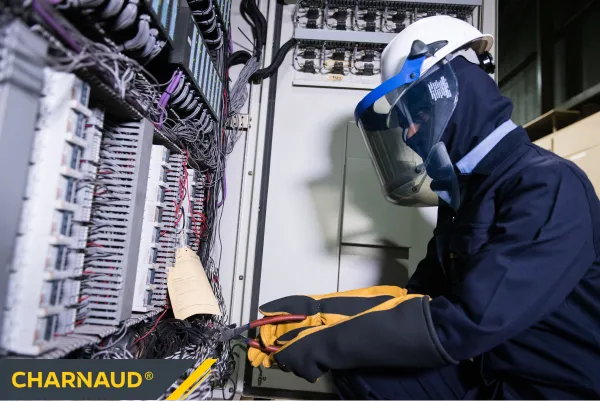
Electricity is essential to modern life, yet it presents hazards across both residential and specialised industrial environments. Safely navigating these risks requires workers to have acute hazard awareness supported by multiple layers of defence, with personal protective equipment (PPE) as the ultimate barrier. Specialised safety gear, such as the CHARNAUD® SURVIVE-ARC® range, is specifically engineered to protect personnel operating in high-risk environments, including power utility maintenance, oil and gas extraction and aluminium smelting.
Direct and Secondary Risks: How Purpose-Built Gear Helps Workers Survive Electrical Accidents
Electrical incidents can often result from a combination of compromised Lockout/Tagout (LOTO) procedures, tight project deadlines, labour shortages and worker complacency. The primary hazards of working near live equipment include electric shock, arc flash, arc blast, deep thermal burns and fatal electrocution. Because an arc flash occurs in milliseconds, far faster than human reaction time, specialised PPE serves as the primary safeguard against life-threatening thermal injury. It is electrical PPE which enables workers to survive such incidents and largely, without serious injury.
Navigating Collateral and Secondary Hazards
In addition to primary electrical threats, workers often face dangerous secondary hazards. An arc flash, for example, generates explosive force that can knock a technician off high scaffolding; even if their PPE successfully prevents severe thermal burns, the resulting fall can cause major physical injury. Because unprotected electrical exposure carries a high risk of fatality, wearing purpose-built protective gear remains critical to survival on the job site.
Occupational Fatalities Trend Downwards
Historical data from the U.S. Bureau of Labor Statistics highlights a steady reduction in workplace electrical fatalities. From 2004 to 2008, the Census of Fatal Occupational Injuries (administered by the US Bureau of Labor Statistics) reported an annual average of 232 occupational electrical fatalities. This number decreased to 161 from 2009 to 2013. The latest data reports that there were 142 occupational electrical fatalities in 2023, and 130 occupational electrical fatalities in 2024. While the numbers stated here do not detail the exact cause of the fatalities, they do indicate a positive downward trend.
Building a Holistic Safety Framework
Improving occupational safety demands constant effort, as workplace accidents typically involve multiple variables. Because frontline personnel face the immediate consequences of these failures, organisations must implement holistic safety measures. This includes ongoing workforce training, regular emergency drills, systematic procedure reviews and equipping workers with high-performance PPE.
Commitment to Zero Compromise on Electrical Safety
While downward fatality trends reflect substantial progress in electrical safety protocols, true risk elimination requires constant vigilance on the frontline. When industrial facilities pair strict compliance standards and thorough hazard assessments with fully certified arc-rated apparel, they transform life-threatening events into survivable encounters. Providing workers with tested, high-performance protection ensures that every technician possesses the ultimate safeguard to execute complex tasks and return home safely.


