
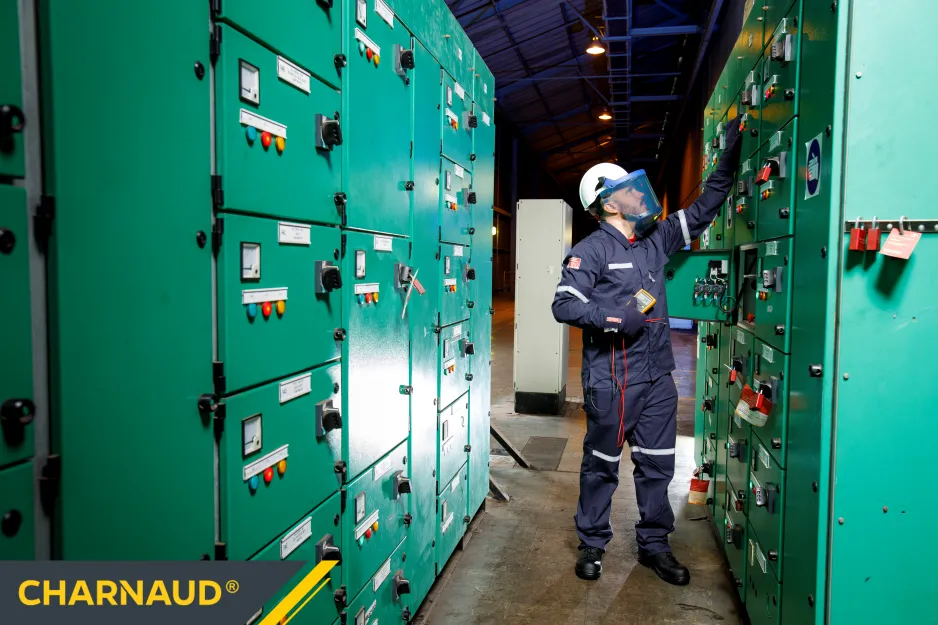
Summary: Arc-rated personal protective equipment (PPE) is clothing and gear that has been tested against the heat generated during an arc flash. Selecting the correct protective clothing means matching the garment’s certified calorie rating (cal rating) to the incident energy found in a formal workplace risk assessment.
Standard workwear and non-rated flame-resistant (FR) fabrics leave workers open to severe burns, because only arc-rated (AR) materials are tested against arc flash exposure.
A sound arc safety plan takes more than picking a single number. It also looks at how the finished garment performs, whether the worker is covered from head to foot, and whether the gear meets the relevant safety standards.
What Is Arc-Rated PPE and Why Does the Cal/cm² Rating Matter?
When an electric arc flash happens around switchgear, conductors or panels, the surrounding air heats up rapidly and can reach about 19 000 °C within milliseconds. Everyday clothing, and even general flame-resistant garments, are not designed to withstand this level of heat and can melt or catch fire.
In short: arc-rated PPE is clothing and gear that has been tested to protect the wearer from the heat of an arc flash. Its protection is measured in calories per square centimetre (cal/cm²).
The cal/cm² figure tells you how much heat energy a fabric can absorb before the wearer would suffer a second-degree burn. The main benchmark is the Arc Thermal Performance Value (ATPV). An ATPV rating is the level of heat energy at which there is a 50% chance that enough heat passes through the fabric to cause a second-degree burn.
Safety managers use this value to compare the gear against the results of their site’s arc flash study. CHARNAUD®’s SURVIVE-ARC® range offers certified protection at several levels, so each team can be matched to the exposure it faces.
Core Criteria for Selecting Arc Flash Protective Wear
Choosing well comes down to three things: the hazard you have assessed, how well the whole garment is made, and whether people can comfortably work in it.
1. Matching the Cal/cm² Values to Calculated Incident Energy
An arc flash hazard assessment calculates the amount of heat energy a worker could be exposed to in an arc flash. It looks at the system voltage, the available fault current, how far the worker stands from the equipment, and how long it takes to switch the fault off. Your PPE must be rated to meet or exceed this calculated exposure.
It is tempting to give all workers the highest rating available, but this is a common mistake. Over-specifying gear for low-energy maintenance can restrict movement, cause heat stress, and lead workers to unfasten or take off their PPE.
CHARNAUD® SURVIVE-ARC® workwear comes in several tiers of protection. It is still up to the buyer and safety officer to check that the garment’s rating is higher than the calculated hazard level for the task at hand.
2. Fabric Certification vs Finished Garment Integrity
A certified arc-rated fabric does not automatically guarantee a certified finished garment.
In an arc flash, the seams, zips, buttons and trims endure the heat too. If the thread burns through, a seam can split open. If a metal zip heats up, it can burn the skin underneath. There are standards that deal with this by setting rules for seams, closures and metal parts. Ask your supplier for test evidence for the exact garment you are buying, not only the fabric.
CHARNAUD® shows the certified arc rating on its finished SURVIVE-ARC® garments. This confirms that the whole garment, not just the fabric, has been independently tested to international standards.
3. Deploying a Coordinated Head-to-Foot® Protective System
The heat and blast of an arc flash spread in all directions, so partial protection is dangerous. An 8 cal/cm² switching jacket does little good if the worker is wearing standard leather gloves, ordinary safety glasses or everyday work trousers.
Think of the worker as one system. Depending on the energy level, the main layer (shirt, trousers or coverall) needs to be backed up with:
- an arc-rated balaclava or hood
- an arc-rated face shield or goggles
- arc-rated gloves, or leather over-gloves worn on top of insulating gloves
- hearing protection, because an arc blast is extremely loud
- safety footwear suited to electrical work
CHARNAUD® designs the SURVIVE-ARC® range around the Head-to-Foot® principle. Every component, from base layers to multi-layer switching hoods, is made to work together, so there are no gaps in protection.
Key Arc-Rated PPE Considerations for Electrical Workers
| What to check | What it means in practice | Why it matters |
|---|---|---|
| Risk assessment match | Choose gear rated at or above the incident energy for each task. | Avoids both too little protection and needless heavy gear. |
| Finished garment testing | Make sure seams, zips and trims have been tested, not only the fabric. | The garment holds together when it counts. |
| Recognised standards | Look for IEC 61482-2 (garments) and ASTM F1506 (textiles). NFPA 70E tells you when arc-rated PPE is needed and how to select it. | Gives you a clear, recognised basis for choosing gear. |
| Head-to-Foot® cover | Add arc-rated hoods or balaclavas, face protection, gloves, hearing protection and footwear as needed. | Leaves no unprotected gaps. |
| Comfort and fit | Look for light, breathable fabric and a fit that allows free movement. | Workers who are comfortable keep their PPE on. |
| Comfort and inspection | Wash as the label says, and avoid bleach and fabric softener. Check for holes, worn seams, and oil or grease contamination. | Damaged or dirty garments may not protect as rated. Replace them. |
Frequently Asked Questions
What is arc-rated PPE?
Arc-rated PPE refers to specialised protective clothing, face shields, hoods, and gloves independently tested to protect against the heat of an electric arc flash. Unlike normal workwear, each item has a measured rating that tells you how much heat it can withstand.
What does cal/cm² mean in arc flash PPE?
Cal/cm² means calories per square centimetre. It is a measure of heat energy landing on a surface. On a piece of PPE, the number shows how much heat the material can take before the wearer would start to get a second-degree burn.
What cal rating do I need?
It depends on the incident energy from your arc flash risk assessment. Your PPE must be rated at or above that figure. As a rough guide, NFPA 70E groups PPE into four categories, with minimum arc ratings of 4 cal/cm² (CAT 1), 8 cal/cm² (CAT 2), 25 cal/cm² (CAT 3) and 40 cal/cm² (CAT 4). Always work from your own assessment for the specific task.
Is flame-resistant (FR) clothing automatically arc-rated?
No. All arc-rated clothing is flame-resistant, but not all flame-resistant clothing is arc-rated. FR clothing is tested to resist catching fire and to stop burning when the flame is removed. Arc-rated clothing is also tested for how well it handles the intense heat of an electric arc.
Why test the whole garment if the fabric is already rated?
A garment is made up of fabric, thread, zips and buttons. If the thread burns away, the seams can open up and leave bare skin exposed. Testing the finished garment shows that every part of it works together at the stated rating.
What else do workers need for full arc flash protection?
That depends on the hazard level. Most jobs need an arc-rated balaclava or hood with a face shield or goggles, arc-rated gloves or leather over-gloves worn on top of insulating gloves, an electrical-rated hard hat, hearing protection and safety boots.
Partner with CHARNAUD® for Arc-Rated PPE Solutions
CHARNAUD® manufactures certified protective wear for demanding electrical and heavy industrial work. The SURVIVE-ARC® range gives certified protection across a number of hazard categories, while staying practical for everyday wear.
Protect your team with tested, head-to-foot gear that suits the real hazards at your facility.


