
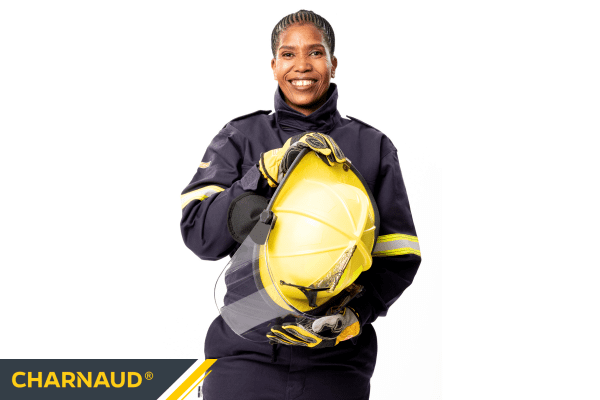
Firefighters face extreme heat, falling debris, and hazardous environments daily. Their gear must provide maximum protection, and one of the most critical pieces of equipment is the firefighting helmet. Designed to shield firefighters from heat, impact, and chemical exposure, these helmets play a crucial role in frontline safety.
A Closer Look at Fire Fighting Helmets
At CHARNAUD®, we specialize in high-performance fire-resistant protective wear to ensure firefighters are equipped for any challenge.
Explore our range of firefighting gear at CHARNAUD®.
1. The Evolution of Fire Fighting Helmets
Fire helmets have undergone significant changes over the years, evolving from basic leather headgear in the 1800s to modern, high-tech designs. Early helmets provided minimal protection, but as firefighting techniques advanced, so did helmet technology. Today’s helmets are crafted from heat-resistant materials that withstand extreme temperatures while offering superior impact resistance. Many modern designs also feature face shields and visors for added protection against debris and flames, ensuring that firefighters remain safe in the most demanding conditions.
Now Read: The Ultimate Guide to Industrial Garments: Safety Workwear for Every Industry
2. Key Features of Modern Fire Helmets
Modern firefighting helmets are designed for durability, comfort, and safety. Lightweight materials such as fiberglass and polycarbonate help reduce fatigue, allowing firefighters to perform efficiently in high-pressure situations. Adjustable suspension systems provide a secure fit, ensuring stability during intense operations. Additionally, many helmets now include integrated communication devices, which allow for clear coordination among team members. These advanced features make firefighting helmets an essential component of a firefighter’s protective gear.
3. Protection Against Heat and Impact
Firefighters often encounter temperatures exceeding 1,000°C, making heat resistance a crucial feature of any firefighting helmet. A well-designed helmet reflects radiant heat, reducing the risk of burns and heat stress. In addition to thermal protection, helmets must also be able to absorb and distribute impact force to prevent head injuries. Firefighters frequently navigate hazardous environments with falling debris and collapsing structures, so a helmet’s ability to resist penetration is vital for overall safety.
4. Choosing the Right Helmet for the Job
Different firefighting scenarios require specialized helmets to address specific risks. Structural firefighting helmets are designed for building fires, offering superior heat resistance and impact protection. Wildland firefighting helmets, on the other hand, are lightweight and well-ventilated to ensure comfort during prolonged outdoor operations. Rescue helmets, used in high-risk extrication situations, are designed to protect against multiple hazards, including falling objects and electrical dangers. Selecting the right helmet for the job ensures that firefighters have the protection they need in any situation.
5. The Importance of Regular Helmet Maintenance
To maintain their effectiveness, firefighting helmets must be properly maintained. Regular inspections help identify cracks, worn-out padding, or loose straps that could compromise protection. Helmets should also be cleaned after every use to remove contaminants such as soot, chemicals, and debris. Over time, wear and tear can reduce a helmet’s protective capabilities, so it is important to follow safety guidelines for replacement. By taking proper care of their helmets, firefighters can ensure they remain fully protected on the job.
Partner with CHARNAUD® Today
Ensuring firefighter safety starts with high-quality protective equipment. A reliable firefighting helmet provides essential protection against heat, impact, and debris, allowing firefighters to perform their duties with confidence. Investing in durable and well-maintained helmets can make all the difference in high-risk situations.
At CHARNAUD®, we are committed to providing top-tier PPE solutions that keep firefighters safe in the most challenging environments. Explore our range of fire-resistant protective wear today.
Now Read: The Evolution of Firefighter PPE: NFPA 1970 and Its Impact


