
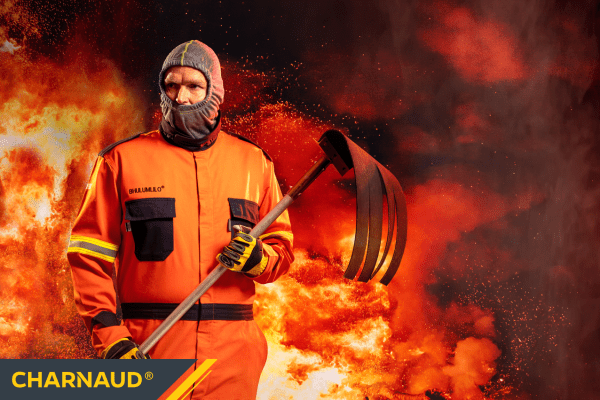
When it comes to protective clothing, especially in environments where flash fires are a risk, Flame Resistant (FR) garments are essential. Modacrylic, a synthetic fiber known for its inherent flame retardancy, is a popular choice for many FR applications. However, while modacrylic excels at resisting ignition and self-extinguishing, its use in FR garments comes with a less-discussed downside: off-gassing, particularly when exposed to heat, and the potential for leaching of hazardous chemicals like antimony trioxide.
Many consumers and even some professionals are unaware of the potential hazards associated with modacrylic FR fabrics beyond their fire performance. While they may protect against burns, what happens to the wearer when these garments are heated, and what other chemicals might they be exposed to?
What is Off-Gassing?
Off-gassing refers to the release of volatile organic compounds (VOCs) and other chemicals from materials into the air. This process can occur continuously over time or be significantly accelerated by heat. In the context of modacrylic FR garments, off-gassing becomes a concern when the fabric is exposed to elevated temperatures, such as:
- Proximity to heat sources: Working near machinery, furnaces, or other industrial equipment that emits heat.
- Even low-level thermal exposure: While not igniting, sustained exposure to radiant heat can still trigger off-gassing.
The Chemical Cocktail: What’s Being Released?
Modacrylic fibers are copolymers, meaning they are made from a combination of different monomers, primarily acrylonitrile and vinylidene chloride or vinyl chloride. It’s the presence of these chlorine-containing components that gives modacrylic its excellent flame retardant properties. However, when heated, these compounds can break down and release various gases, including:
- Hydrogen Chloride (HCl): This is perhaps the most significant concern. Hydrogen chloride is a corrosive, colorless gas with a pungent odor. Inhaling HCl can irritate the respiratory system, eyes, and skin. At higher concentrations, it can cause severe respiratory distress, lung damage, and even be life-threatening.
- Other VOCs: Depending on the specific formulation and dyes used, other volatile organic compounds could also be released, potentially contributing to respiratory irritation, headaches, and other symptoms in sensitive individuals.
The Leaching Hazard: Antimony Trioxide
Beyond off-gassing, another critical concern with some modacrylic FR garments is the use of antimony trioxide (Sb2O3) as a synergistic flame retardant. While antimony trioxide itself is not inherently a volatile compound, it is present in the fabric and raises concerns about:
- Leaching through skin contact: Antimony compounds, including antimony trioxide, have been linked to skin irritation and allergic reactions in some individuals. Prolonged or direct skin contact, especially with sweat, could facilitate the leaching of antimony from the fabric onto the skin.
- Inhalation of fine particles: Over time, garment wear and washing can lead to the release of microscopic fibers and particles containing antimony trioxide, which could then be inhaled.
- Carcinogenic classification: The International Agency for Research on Cancer (IARC) classifies antimony trioxide as a Group 2B carcinogen – possibly carcinogenic to humans. This classification is based on sufficient evidence in experimental animals and limited evidence in humans. Chronic exposure, even at low levels, is a significant concern for workers regularly exposed to these garments.
The Impact on Wearers: Short-Term and Long-Term Concerns
The immediate effects of inhaling off-gassed chemicals from modacrylic FR garments can include:
- Respiratory irritation: Coughing, wheezing, shortness of breath, and chest tightness.
- Eye irritation: Redness, watering, and a burning sensation.
- Skin irritation: Itching or rash in areas where the skin is exposed to the gases or leached chemicals.
- Headaches and dizziness.
For individuals who wear modacrylic FR garments regularly or are consistently exposed to heat while wearing them, there could be long-term health implications. The cumulative exposure to low levels of hydrogen chloride, other VOCs, and particularly the potential for antimony leaching, could contribute to:
- Chronic respiratory issues: Persistent cough, asthma exacerbation, or bronchitis.Sensitization: Developing increased sensitivity to these chemicals over time.
- Increased cancer risk: Given antimony trioxide’s classification as a possible carcinogen, long-term exposure raises concerns about its potential contribution to cancer development.
Better Solutions Exist: Moving Beyond Modacrylic’s Hazards
While modacrylic FR garments provide crucial protection against fire, it’s vital to acknowledge the complete picture of their properties, including the potential for off-gassing and the leaching of hazardous chemicals like antimony trioxide. This awareness drives the search for safer, equally effective alternatives.
Fortunately, there are better solutions for FR garments that do not include these hazards:
- Inherently FR Aramid Fibers: These fibers have flame resistance built into their molecular structure, meaning they don’t rely on added chemical treatments that can off-gas or leach. They offer excellent thermal protection, durability, and do not contain halogenated compounds or antimony.
- FR-Treated Natural Fibers (e.g., Cotton, Rayon): Advances in FR treatments for natural fibers have led to solutions that are durable, breathable, and often free from halogenated flame retardants and heavy metals like antimony. These treatments chemically bond the FR properties to the fiber.
- Proprietary FR Blends: Many manufacturers are developing advanced blends of fibers that achieve superior FR performance without the need for controversial chemicals. These often focus on inherent FR properties or safer, more stable chemical applications.
A Need for Awareness and Safer Alternatives
Understanding the phenomenon of off-gassing and the potential for leaching of hazardous chemicals like antimony trioxide is crucial for making informed decisions about protective clothing. Employers and workers alike need to be aware of these dangers and consider all aspects of garment performance, not just fire resistance, to ensure true safety and well-being.
Before making a decision about FR garments, always consult with safety professionals and thoroughly research the materials to ensure they are the best fit for your specific environment and health considerations. Prioritizing garments that achieve FR standards through inherently safe materials or advanced, non-toxic treatments is a critical step towards comprehensive worker protection
Moving Beyond Modacrylic: Safer Solutions Exist
The choice between fire protection and health protection is a false dilemma; modern FR technology offers both. As a leader in protective wear, CHARNAUD is committed to providing these safer solutions, ensuring your team is shielded not only from flash fire but from the hidden chemical dangers lurking in outdated modacrylic materials.


